Using AI to Accelerate User Journey Mapping and Feature Ideation
Use AI to accelerate user journey mapping, uncover opportunities, and shape feature ideas before moving into flows, wireframes, and prototypes.
Introduction
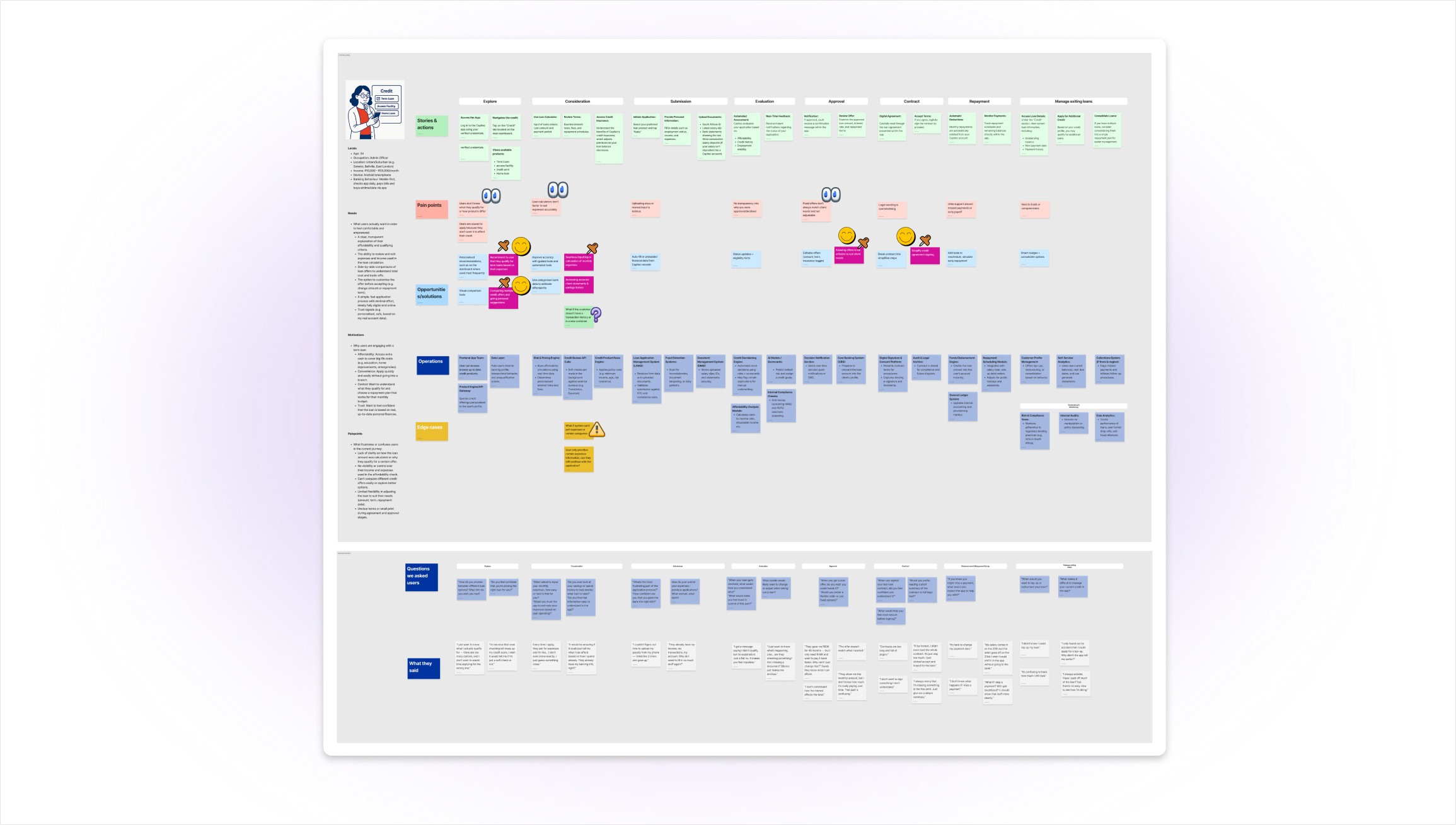
Mapping complex user journeys is one of the most effective ways to understand how a product should work before designing detailed flows and interfaces.
When working in complex domains such as financial services, the real value lies in shaping the logic of the experience first. By defining stages, user needs, opportunities, and operational dependencies, teams can build a clear foundation for design and development.
Why Journey Mapping Matters
User journey maps provide a high-level view of the entire experience, helping teams connect user goals with business processes and technical systems.
They allow teams to consider:
Key stages in the experience
User needs and emotions
Insights and opportunity areas
Customer service processes
Backend systems and dependencies
“Journey mapping helps teams see the experience as a connected system rather than a series of screens.”
Where AI Adds Value
When time is limited or the domain is unfamiliar, AI can act as a valuable thinking partner.
Tools like ChatGPT can help expand ideas, identify hidden patterns, and generate alternative perspectives based on the research and insights you provide.
The quality of the output depends on the strength of your prompts, the clarity of your framing, and your ability to critically review the results.
How I Used AI in Practice
On a recent project, I used AI to refine a future-state journey by helping to:
Elaborate on each stage of the journey
Explore user profiles and behavioural context
Generate user stories and opportunity spaces
Suggest features based on pain points and unmet needs
Interpret backend systems and operational dependencies
This accelerated the process of building a more comprehensive view of the challenge area before further team workshops and critique.
The Role of Human Judgment
AI does not replace strategic thinking.
A structured approach is still required to frame the problem, assess the relevance of outputs, and validate ideas with stakeholders and users.
The strongest results come from combining AI-assisted ideation with human expertise, collaboration, and critical review.
From Journey to Design Execution
Once the journey is validated, teams can move into more detailed design activities, including:
Prioritising opportunity areas
Defining use cases
Mapping task flows
Creating wireframes
Building prototypes
This ensures that detailed design decisions are grounded in a well-considered experience strategy.
Key Takeaway
AI can significantly accelerate journey mapping and feature ideation when used as a structured thinking partner.
By combining research insights, thoughtful prompting, and critical review, teams can develop a clearer and more comprehensive understanding of complex product challenges.
Conclusion
Journey mapping remains one of the most powerful tools in product design.
When paired with AI, it becomes even more effective at exploring possibilities, uncovering patterns, and shaping robust experience strategies before moving into detailed design.