Observe, Reflect, Interpret, Design: A Simple Framework for Better Feedback
Use a simple four-part feedback framework to capture insights, align teams, and turn observations into actionable design and product decisions.
Introduction
Clear feedback is essential to good design, research, and team collaboration. Without structure, valuable insights can be overlooked or difficult to act on.
One of the most practical tools I learned while coaching at the d-school Afrika is a simple four-part feedback model that helps teams capture what is working, what is not, and what to explore next.
Why Structured Feedback Matters
Whether you are testing a prototype, planning a workshop, or running a retrospective, structured feedback creates clarity and alignment.
Instead of collecting scattered comments, this framework helps teams turn observations into actionable insights.
“Better questions lead to better insights and more intentional design decisions.”
The Four-Part Feedback Model
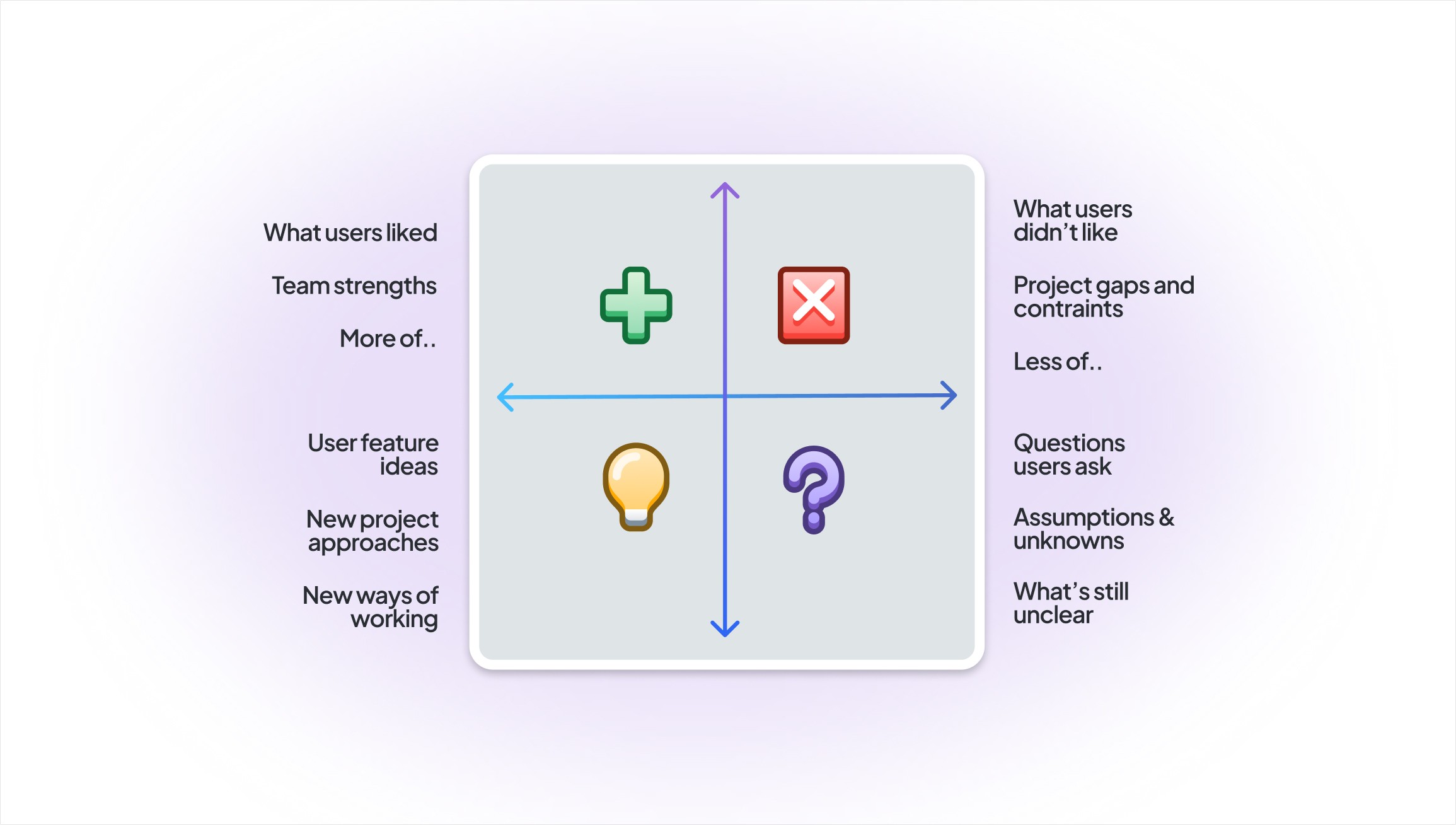
More Of...
What is working well? What should be kept, strengthened, or amplified?
Less Of...
What is causing friction? What should be reduced or avoided?
What If...
What new ideas or opportunities could be explored?
We’re Curious About...
What remains unclear? Which assumptions still need to be tested?
Where This Framework Can Be Applied
This model is highly versatile and can support:
User research and usability testing
Prototype and design critiques
Project kickoffs
Workshop planning
Team retrospectives
It provides a simple lens for observing what exists and interpreting what could be.
How It Improves Team Alignment
By organising feedback into clear categories, teams can:
Surface patterns more quickly
Prioritise meaningful improvements
Challenge assumptions
Explore new opportunities
Move forward with shared understanding
The result is better decision-making and stronger collaboration.
Key Takeaway
When you observe what is and interpret what could be, this simple framework becomes a powerful tool for generating insights and guiding action.
It helps teams ask better questions, uncover opportunities, and design with greater clarity and intention.
Conclusion
Structured feedback is one of the most effective ways to turn conversations into progress.
Whether you are conducting research, facilitating workshops, or improving team processes, this four-part model offers a practical way to capture insights and move forward with confidence.